


Blog
Home Remedies For Chikungunya, Diet, Treatment And Prevention
What is Chikungunya?
Chikungunya is an illness that spreads through mosquito bites. The mosquitoes carrying the CHIKV virus, if they bite a human being, transmit the virus to cause sickness. There are two types of mosquitoes that can spread this infection.
The virus is very active when temperature varies between 10-20 degrees Celsius, temperature lower or high than this can reduce viral activity but does not inhibit it completely.
Controlling this virus from spreading is extremely difficult, as it gets circulated through the blood of animals and birds as well.
Chikungunya has a death rate of 1 in 1000, and it can be fatal for very old or very young people and people with medical conditions that get aggravated due to infection.
Home remedies for chikungunya are helpful in treating the infection in a short time.
There is no vaccination available to control this infection from spreading.
Even home remedies for chikungunya cannot prevent infection from occurring.
This infection is marked by painful symptoms. It can restrict a person to bed by causing moderate to severe pain on movement.
The symptoms of infection may last for a week, but aftereffects may persist for months.
Natural treatment for chikungunya helps in alleviating infection and aftereffects efficiently and safely.
People traveling and staying in unknown places are at high risk of catching this infection.
Though most cases happen in Asia and the Asia-Pacific region, this virus has made a large number of people sick even in European countries and parts of the USA.
You may like reading:
Ayurvedic Medicines for Rheumatoid Arthritis Pain, Swelling
Ayurvedic Medicines for Osteoarthritis Pain to Reduce Stiffness
Causes and Symptoms of Chikungunya
Mosquito bites are a cause of infection. An infected mosquito, when it bites and pierces the skin, transmits the virus into the human body.
This virus, in a span of 10-12 days, grows and raises symptoms of chikungunya.
The virus can survive in humans for a longer period in the blood during an outbreak.
From here, it gets transmitted to mosquitoes and back to humans.
During other times, birds, monkeys, and other animals are reservoirs for the virus without carrying any symptoms.
Apart from mosquito bites, infection can be transmitted from mother to child and also through the donation of infected blood and organs.
However, these kinds of transmissions of infection are rare and survive only in theory.
Once bitten, a human becomes a reservoir of the virus and a source of infection to others.
Aedes and A. ageypti are types of mosquitos which spread the infection through virus transmission from humans to humans.
The incubation period for the virus is from one day to 10-12 days, but usually symptoms arrive within 5-7 days. The symptoms of chikungunya are fever and joint pain.
The severity of joint pain may vary from person to person; the formation of a rash over the skin is also a symptom of infection.
The fever and other symptoms may subside in a week or 10 days, but joint pain can continue for months.
Other symptoms of the infection are digestive problems, conjunctivitis, headaches, and fatigue.
During a fever, viruses can be identified through blood tests. The fever of chikungunya is biphasic, which can reach up to 102 degrees to 104 degrees and come and go in phases.
Once the fever subsides, the joint pain may last for weeks to a year. Rash formation is common in nearly 50% of cases.
Neurological problems are rare but also a possibility with chikungunya.
Home Remedies for Chikungunya
Giloy – Home Remedies for Chikungunya
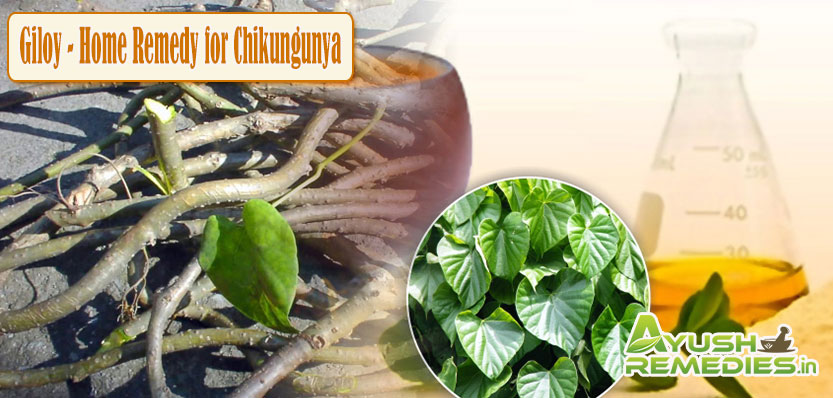
There are very useful home remedies for chikungunya, which are effective in clearing the infection and also relieving its frustrating symptoms.
Giloy is an herb that, due to its anti-arthritic, anti-inflammatory, and immune-modulatory properties, has gained fame as a very beneficial remedy for infections.
This herb can be used as a supplement in the form of a tonic or a capsule. The dosage prescribed for an adult in a day is about one gram per day.
For children below the age of five years, 250 Mg is the prescribed quantity.
Regular intake of this herb from the day of the onset of symptoms works as one of the reliable home remedies for chikungunya.
Papaya Leaves – Home Remedy for Chikungunya
Papaya leaves are also trusted and effective home remedies for chikungunya. Take about 7-8 fresh leaves of papaya.
Remove the stem and central vein and crush the leaves, and blend with some water to get a paste.
Strain this paste and collect the liquid part. Consume two teaspoons of this every three hours till fever subsides.
The use of these leaves helps in clearing infection and suppressing the aftereffects of infection.
Cold Compresses – Treatment to Cure Symptoms of Chikungunya
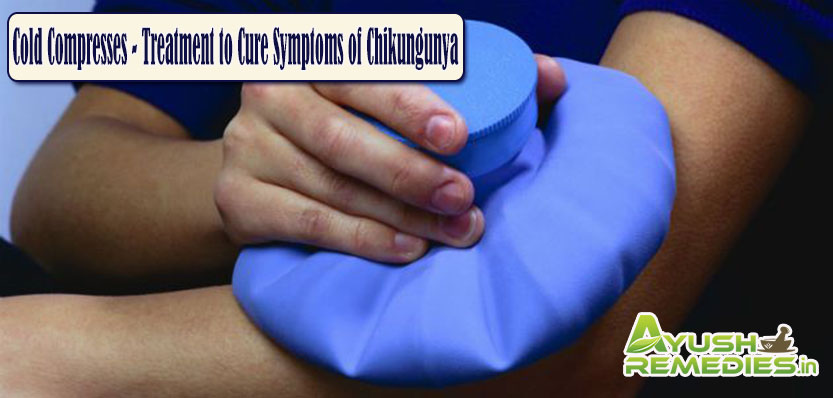
Cold compresses are good home remedies for chikungunya symptoms like joint pain. Crush a few ice cubes and wrap the contents in a cotton cloth.
Apply the bag over the joint for a minute or more and remove, apply again once blood flow begins, and repeat 2-3 times in the day.
Cold compresses maintain movement and prevent pain from aggravating.
These also suppress stiffness in the convalescent phase and provide faster recovery.
Turmeric – Home Remedies for Chikungunya
Turmeric is anti-inflammatory and also improves immune system functions. This is also recommended as a home remedy for chikungunya.
Add half a teaspoon of turmeric to a glass of warm milk and drink before bedtime.
You can sprinkle turmeric over salad or other food items and consume them.
Intake of turmeric is good for clearing infections and relieving symptoms. If you do not want to consume milk, add turmeric to warm water.
Cayenne Pepper – Natural Treatment for Chikungunya
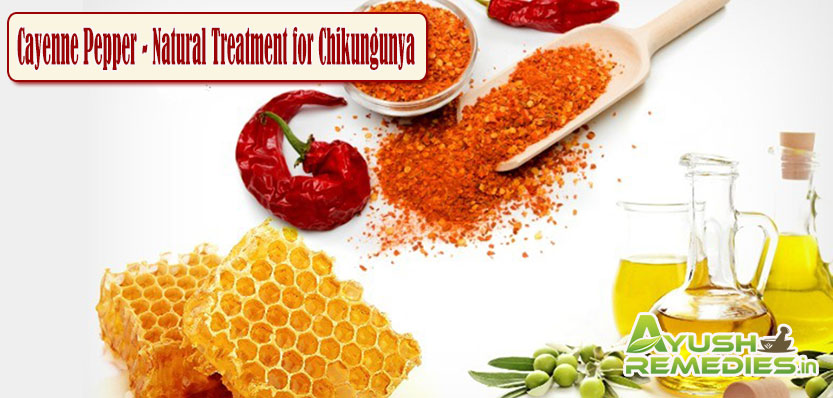
- Cayenne pepper
- Olive oil
- Beeswax
Cayenne pepper works as a highly effective pain reliever. Its topical application relieves pain and promotes movement in joints.
To get a homemade natural treatment for chikungunya joint pain, take 3 tablespoons of cayenne pepper, one cup of olive, jojoba, or almond oil, and half a cup of grated beeswax.
Heat the ingredients in a double-boiler and mix them well.
Put out the flame and allow the mixture to cool down. Keep it in the refrigerator to chill and apply it over affected joints.
Repeat application 2-3 times in the day, it will relieve pain and promote movement.
This is one of the fast-acting home remedies for chikungunya.
Castor Oil and Cinnamon – Remedy to Relieve Symptoms of Chikungunya
Massages of affected joints also work well to relieve the symptoms of infection.
Castor oil and cinnamon mixture works as an effective natural treatment for chikungunya symptoms.
Take two tablespoons of castor oil and add half a teaspoon of cinnamon powder to it.
Heat the mixture to make it warm a bit and apply it over the affected joints. Massage for a few minutes twice a day regularly.
Grapes and Milk – Natural Treatment to Treat Chikungunya

Take a handful of seedless grapes. Chew these and swallow with a cup of warm cow’s milk.
Repeat this remedy twice a day after 6-8 hours regularly to get rid of fever and other symptoms.
Decoction made with Holy basil leaves and water is also an excellent remedy to get rid of fever and related symptoms.
Take 10 leaves of basil and boil with two glasses of water till the water is reduced to half. Strain and drink the remaining water.
Diet for Chikungunya Patients
Diet for chikungunya can be divided into two parts broadly, one for the period when there is fever and another for the convalescent phase.
During a fever, light and semi-solid foods shall be eaten in place of heavy and greasy food items.
Soups, particularly tomato soup with garlic and ginger paste in it, are useful for controlling the virus by improving immunity and supplementing a good amount of nutrition.
Green leafy vegetables are other wonderful foods for gaining nutrition and compounds that fight fatigue and improve immunity.
These shall form the core of the diet during fever in the form of soups or salads.
A very thin mixture of yellow lentil and rice is also a good diet for chikungunya patients during fever.
During a fever, a light meal of citrus fruits is also helpful in curbing viral activity and bringing the fever under control.
All types of citrus fruits like oranges, grapefruit, kiwi, etc., and fruits rich in vitamin C like papaya, pineapple, etc., are good parts of the diet for chikungunya.
Bananas, plantain, apples, avocado, wheat, and nuts shall be given during the recovery phase after fever.
Foods rich in omega-3 fatty acids, like fish, walnuts, pulses, flaxseeds, etc., shall be included in the diet of the patient for faster recovery from chikungunya.
Soy, pomegranates, Chia seeds, button mushrooms, Brazil nuts, cabbage, etc., are rich in zinc and selenium, which are excellent foods for faster recovery and suppressing the aftereffects of infection.
Drink coconut water throughout the fever and recovery phase 2-3 times a day.
This is packed with nutrients and minerals and is excellent for keeping the body hydrated.
Chikungunya Treatment and Prevention
Prevention of chikungunya is only possible by preventing mosquito bites.
The mosquito, which transmits infection from infected humans to animals, birds, and humans back, grows and breeds in still freshwater.
This mosquito is very active during the day, unlike other species of mosquitoes, which are more active at night.
Protection from mosquitoes is the best prevention of chikungunya, as there is no vaccination available to shield against the virus.
Special steps shall be taken to avoid waterlogging even in small amounts.
Even used plastic cups or utensils thrown outside the house can collect rainwater and allow the growth of mosquitoes that transmit chikungunya.
If removing water is not possible, sprinkling insecticides on a regular basis is a good way of killing mosquitoes.
Use insecticide sprays on a regular basis in lawns and around plants.
Avoid moving outside in short-sleeved shirts or short pants. Keep your body covered as much as possible and wear mosquito repellent cream always whenever out in the open.
Mosquitoes carrying viruses can fly a distance, so take care everywhere.
Avoid traveling to places that may contain mosquitoes, and clean the car regularly.
At home, use sticks and soaps which repel mosquitoes; strong sprays shall be sprayed over areas that generally contain water. Keep water coolers and desert coolers dry completely if not in use.
Take special care if someone in a neighborhood or in the family has fallen sick because of chikungunya.
These steps can only provide protection and prevention of chikungunya.
You may like reading:
Ayurvedic Medicines for Shoulder Pain and Stiff Frozen Shoulder
Ayurvedic Treatment for Back Pain, Backache, Herbal Remedies